The Wipers Times Exposé - A Picture of Ernest James Couzens Emerges
With special thanks to Jane Dix, great-granddaughter of Ernest Couzens.
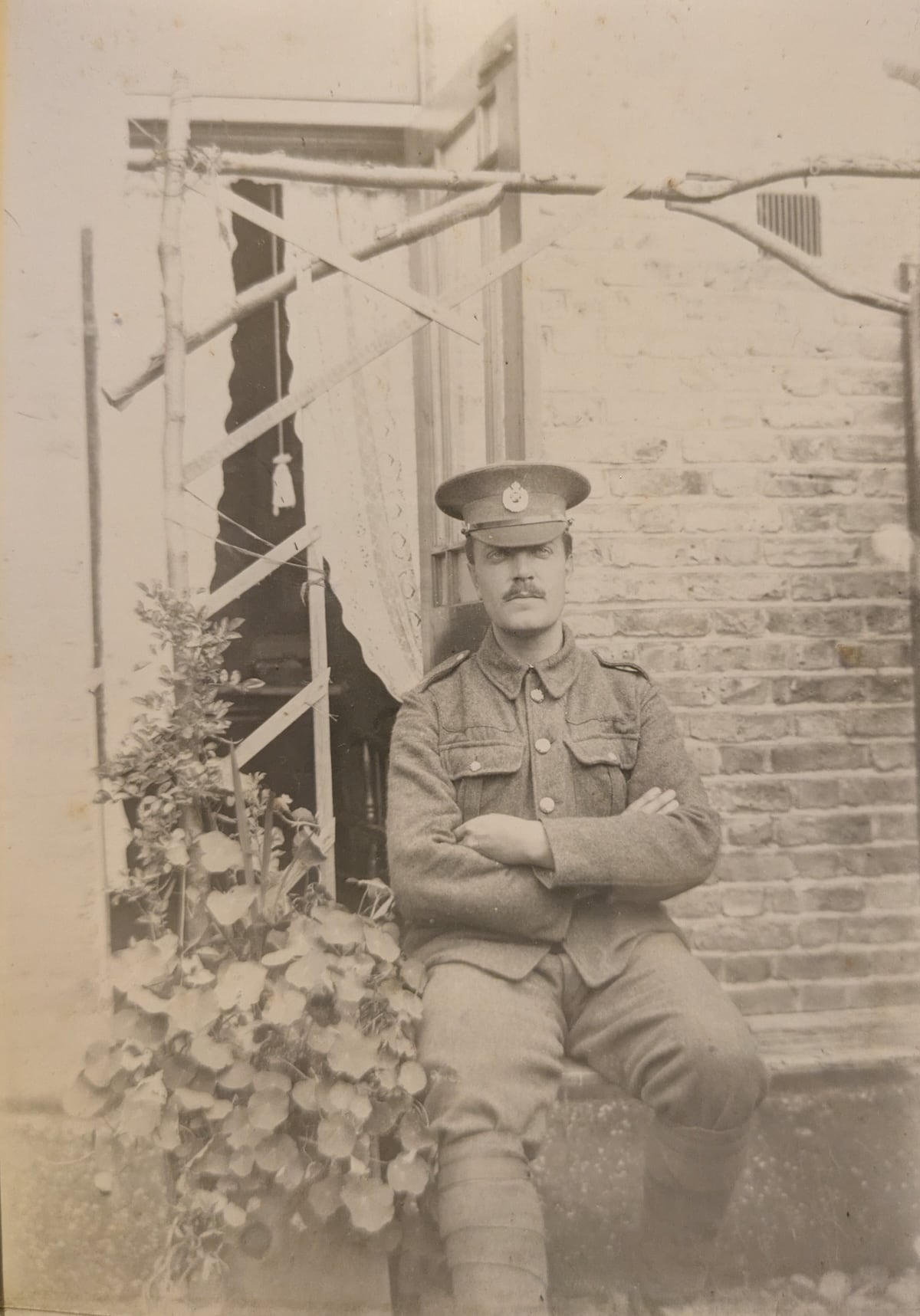
At the start of this year, I was fortunate to be contacted by the family of Ernest James Couzens (1883 — 1955), who provided much of the information below, as well as the pictures, which are reproduced here with their permission.
Couzens — or Sapper Couzens (service number 94321) as he was then — is responsible for the most famous illustration associated with the Wipers Times: 'Questions a Platoon Commander should ask himself'.
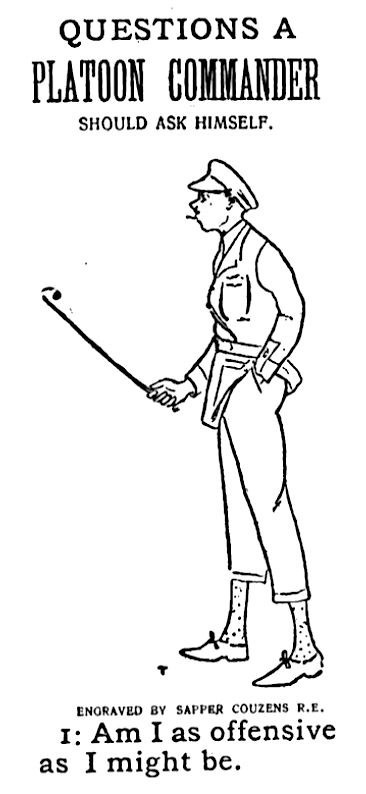
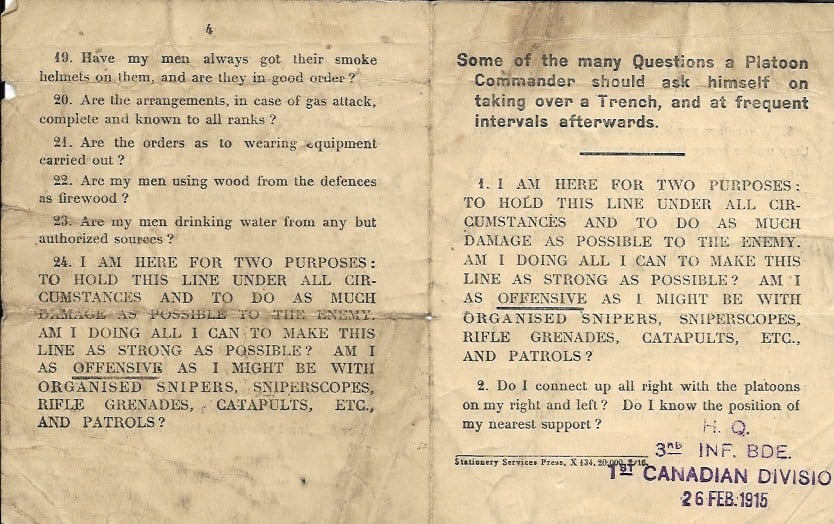
The cartoon is a parody of the training pamphlet SS no. 408, first issued in 1915. Its full title was 'General Staff, Stationery Services no. 408: Some of the many Questions a Platoon Commander should ask himself on taking over a Trench, and at frequent intervals afterwards'.
Ernest was born on 25 April 1883 in the district of Croydon to James and Martha Couzens. He had two older siblings, Florence (born 1879) and Edith (born 1881), who, as children, took delight in telling him sad stories to make him cry. As a boy, he attended St John's School in Penge, Surrey, and according to the 1901 census, the family lived nearby at 13 Malcolm Road. By the age of 17, he was employed as a wood engraver.1
In 1908, he married Ellen Bryant (1874 — 1950) and had a daughter, Ellen Louise, a year later. The 1911 Census showed them living at 81 Carlton Park Avenue, Raynes Park, and their second daughter, Cecilia, was born in the same year.2 He lived in Raynes Park for the rest of his life, and it was also where the opening photograph was taken while he was on leave.3
His service records do not survive, and, like most veterans of the war, Couzens did not speak about his experiences afterwards. From the slim anecdotes collected by his family, his war experience consisted of working on mining under enemy trenches, as well as being a bicycle messenger, a job the other sappers would tease him about before he set off, joking that their bombs might go off as he cycled over them.4 Fragments of information suggest that he was entrained for France in September 1915, before being demobbed in May 1919, having obtained the rank of sergeant. As the Wipers Times was the journal of the 24th Division, it would therefore make sense that he was attached to one of the Royal Engineer (RE) companies assigned within it, of which there were three: the 103rd, 104th, and 129th — the latter being the divisional company. However, I believe we can narrow it down to either the 103rd or 104th based on the photograph below. The text on the left of the photograph, 'Newark', refers to the Royal Engineers Technical Centre in Newark that was used for training and organisation before going out to France. The text to the right, 'Somewhere in France', suggests a recent arrival. From going through the unit diaries, both recently arrived companies were undertaking pontoon and trestle bridging training across the River Canche near the commune of Beaurainville, located six miles southeast of Montreuil-sur-mer, which matches the date of the photograph, 21 April.5
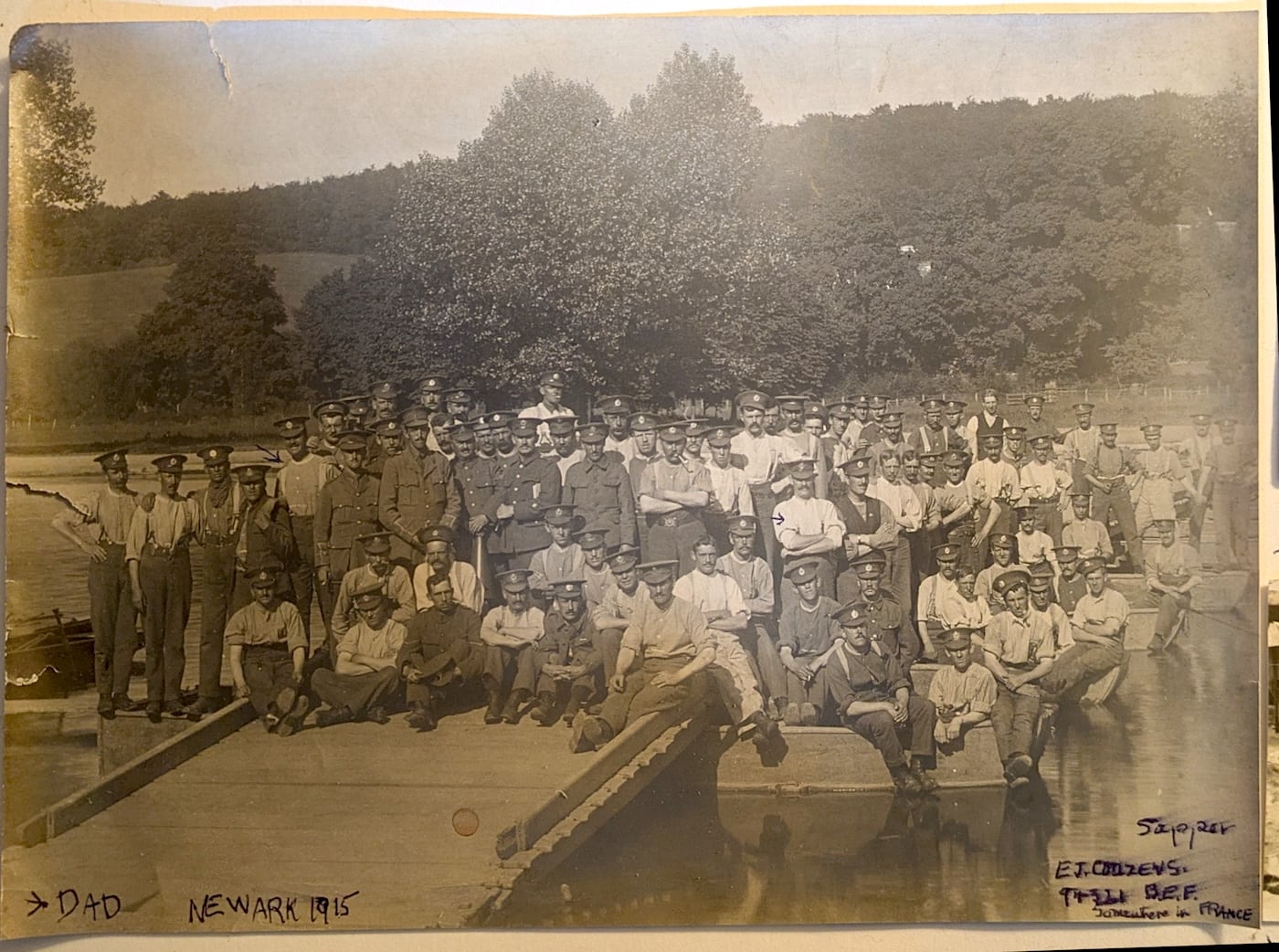
The date was also the last day that both the 103rd and 104th were in the area before moving out onto Bethune and then taking part in the Battle of Loos.
The first thing that struck me from the photograph was that Couzens was a large chap — according to his family, he was 6 ft tall and heavily framed (compare that to a couple of the other Wipers Staff we have covered: Lt. Ward was 5 ft 5 in and 8 stone, while Private Johnson stood 5 ft 6 in and weighed 11 stone). It is fair to conclude that he would have been a notable presence.
I can only speculate on how he became involved in the Wipers Times, but for consideration, the 12th Sherwood Foresters were a pioneer battalion, that is, while trained as conventional infantry, they would also be trained in tasks such as entrenching, road making, and other technical tasks. The men of the unit would be composed of those who had experience in skilled trades, such as metalworkers, engineers, and smiths, as well as men who had experience with picks and shovels. The battalion's role in the division would sit between that of the standard infantry and the engineers. There are a number of references to the Royal Engineers in the Wipers Times, and from the following two examples, we gain some insight into the jocular relationship that existed between pioneers and engineers.
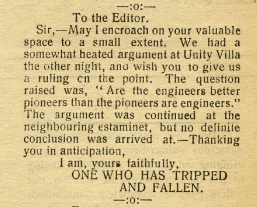
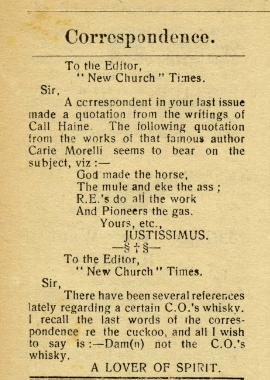
Another consideration is that when the Sherwoods and Royal Engineers were in Ypres, the billet designations for battalions were on top of each other (not an exaggeration; for a billeting officer, it was a case of finding any space and filling it), and there were plenty of opportunities for intermingling in places such as YMCA huts or even nearby Talbot House.
Couzens provided two illustrations for the Wipers, as well as the 'Am I offensive?' cartoon, there was an earlier contribution titled 'Our Hero's Troubles', taken from a sketch by an as yet unidentified "Peter".
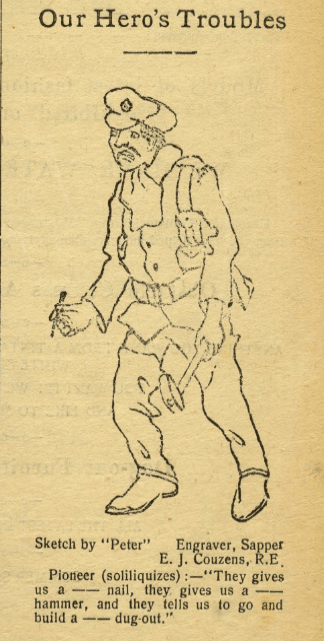
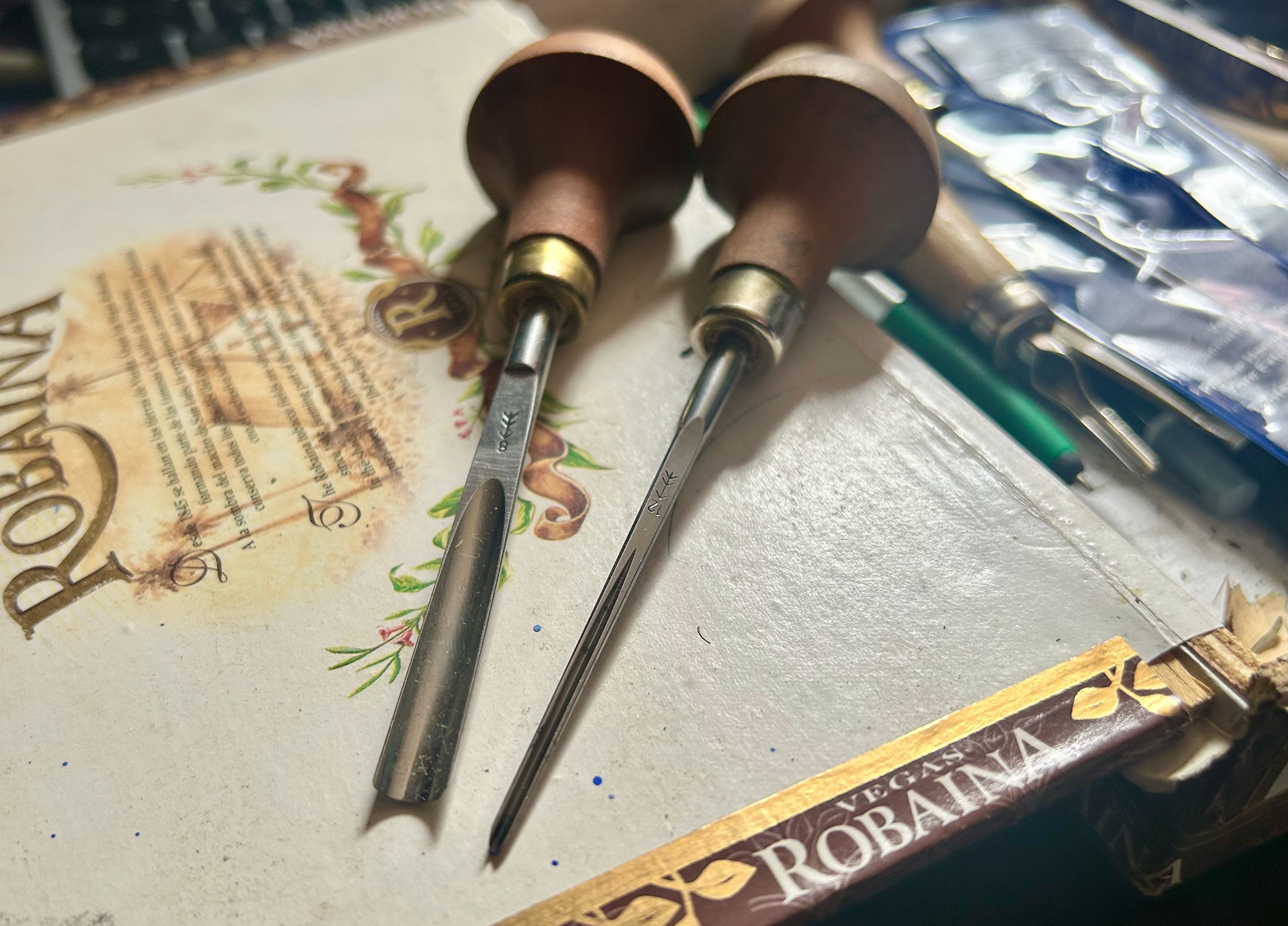
A couple of accounts of the Wipers story mention that he carved these illustrations with a penknife.6 However, as anyone who has done any wood engraving would contest, that would be the wrong tool for the job. The family confirmed that he took two of his engraving tools with him to France, wrapped in an oil cloth. I imagine that they would be similar to the ones in the photograph below, a wide U-shaped tool for clearing away material, and a narrow V-shaped tool for creating clean gorges.
After the war, Couzens was a partner in the firm of C. G. Thomson & Co, based in Holborn Circus, and worked out of an office in Fleet Street, providing illustrations in the 1920s and 1930s for the popular department store Gamages, nicknamed 'The People's Popular Emporium'. The store was located nearby and traded between 1878 and 1972. Gamages was particularly well known for its hardware and toy departments, at one point stocking no fewer than half a million toy soldiers and boasting of having 'England's Largest stock of Roller Skates'.7 If you have spent any time going through periodicals from this time, you will no doubt have come across Couzens' artwork. Even in the 1920s, the goods shown in the store's catalogues and press adverts were mainly produced by hand, and Couzens engraved many of these images. The store advertised in numerous magazines and the national press, and Figure 9 is an example of one such advert.
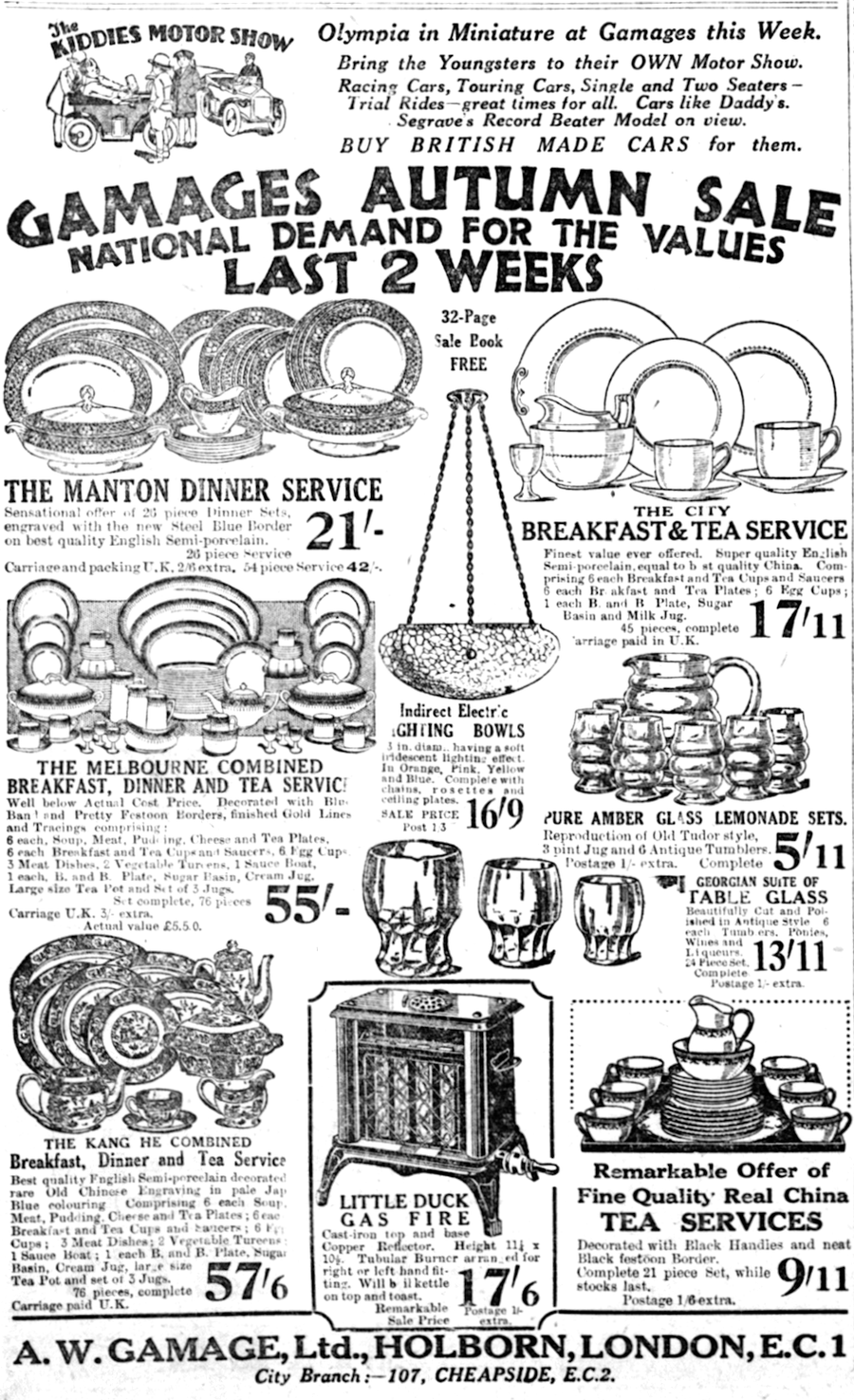
A tea set similar to the Kang He set pictured in the advert is still in the family's possession (Gamages frequently changed their product configurations). After illustrating the set, Ernest was allowed to keep it and is believed to have passed it to his daughter Lou, who in turn gave it to her son Victor and his bride Gisela as a wedding present. During the Second World War, Couzens was employed by the Air Ministry, working alongside inventors to turn their ideas into visualisations.8
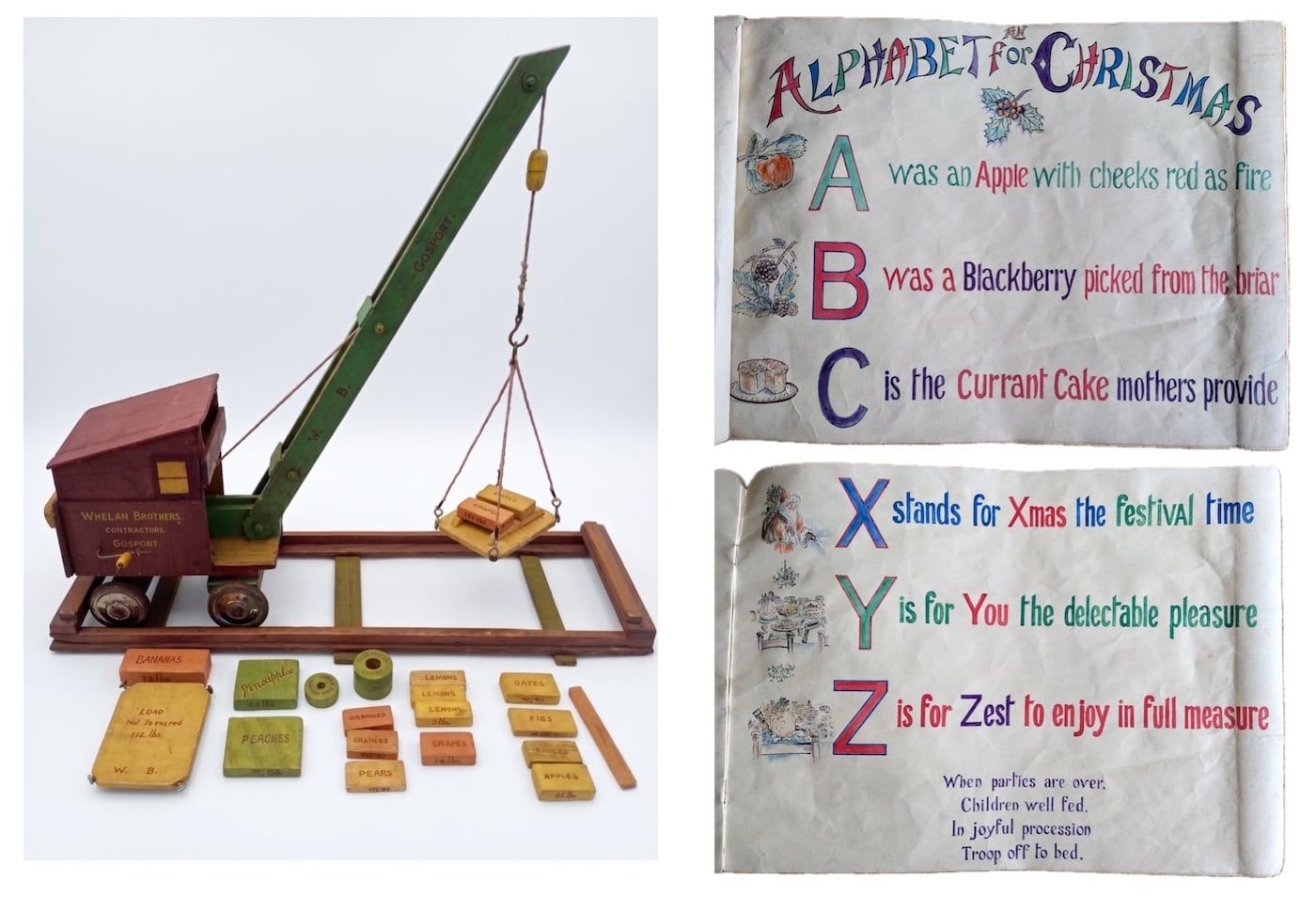
By the family's account, Ernest was a good-natured, humorous and entertaining man who amused his grandchildren by pulling silly faces, making wooden toys, and keeping them entertained on his allotment. His grandson Patrick recalls that one of Ernest's eyes was noticeably larger than the other, the result of years spent working with an eyeglass permanently in place. The image below shows a wooden crane set (which remarkably still works) that Ernest made for his grandchildren during or shortly after the Second World War, alongside pages from an illustrated ABC he drew for them for Christmas 1944.
Email conversation with Jane Dix, 20 January 2026 & 14 September 2026; 1901 Census England and Wales. ↩︎
1911 Census England and Wales; England & Wales Births 1837-2006. ↩︎
Email conversation with Jane Dix. ↩︎
Email conversation with Jane Dix. ↩︎
TNA/WO-95/2199-1, Unit Diary, 103rd Field Coy Royal Engineers ↩︎
See for example, Civil and Military Gazette (Lahore), 1 January 1930, p.3. ↩︎
Bryan Apps, When Toys Were Fun (Halsgrove, 2010), p.28, 56; Stephen Calloway, The Golden Age of Shopping 1910-1940: A Miscellany of Items from Harrods, Gamages and Army Navy Stores (Studio Editions, 1996), p.30. ↩︎
Email conversation with Jane Dix. ↩︎
Posts in this series
- The Wipers Times, Tatler, and the Identity of ‘Violet’ from Violet’s Chronicle of Fashion: An Exposé
- The Wipers Times Exposé Addendum: Conclusive Proof, the Letters of Thomas Moore Emmanuel Ward, and Other Contributors Identified
- The Wipers Times Exposé: Staff, Suspects, and Witnesses
- The Wipers Times Exposé: The Printer and the Presses
- The Wipers Times Exposé: The Actor, Avesnes, and the Forgotten Evening Edition of the Wipers Times
- The Wipers Times Exposé: A Picture of Dorothy Violet Hall emerges
- The Wipers Times Exposé: Contemporary Accounts of the Wipers Times
- The Wipers Times Exposé: Jack Johnson, the Private Who Discovered the Press
- The Wipers Times Exposé - A Picture of Ernest James Couzens Emerges